


In contemporary design, windows and doors are no longer seen as merely technical components; they are architectural elements in their own right, capable of redefining the relationship between interior and exterior spaces, between light and texture. Minimal frames, also known as “slim-profile systems”, such as those in our “Skyline Minimal Frames” collection, were developed precisely to address this need: minimising the visual presence of the frame in order to maximise the glazed surface area and with it the perceptual quality and natural illumination of interior spaces.
From a technical point of view, a window or door frame is described as ‘minimal’ when the thickness of its visible profile – whether of the sash or the frame –is reduced to less than 50 mm, reaching as little as 37 mm in some cases. This represents a significant reduction compared to traditional window and door systems and is made possible by the use of advanced construction systems; bonded structural glass that contributes to the overall rigidity of the system, high-performance gaskets, integrated or concealed hardware, and sealing systems that ensure thermal and acoustic insulation ratings even superior to those of conventional frames.
Contemporary Architecture and Minimal-Frame Design
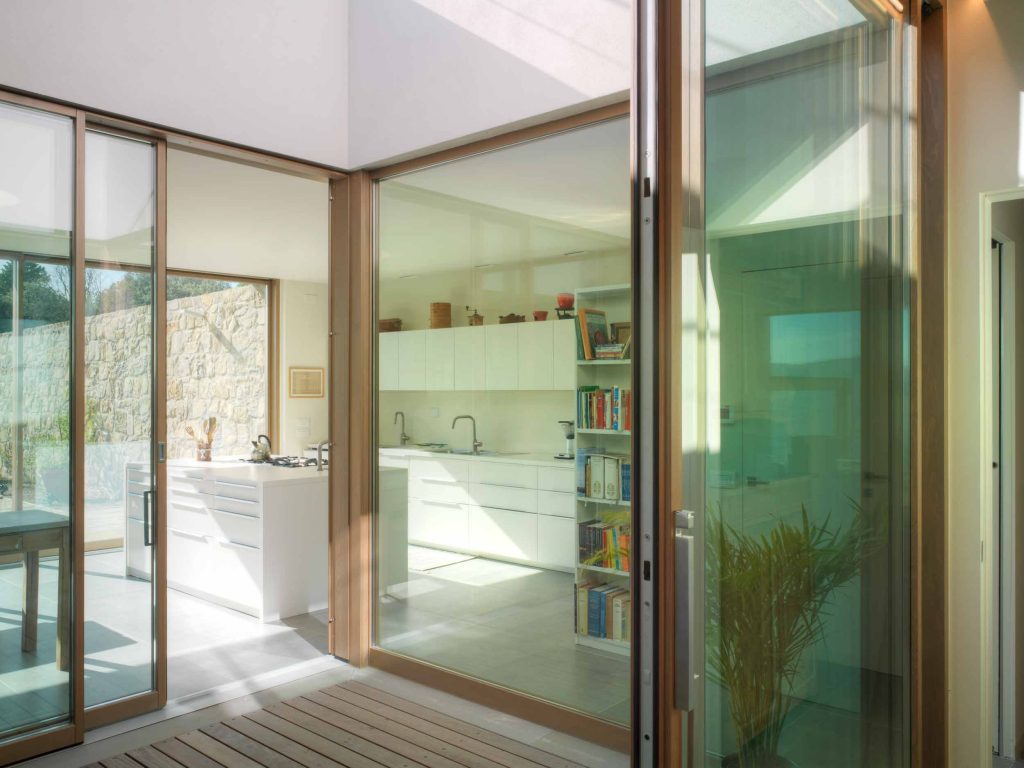
Cavedio interno a Villa Firenze con serramenti ad alzante scorrevole
The trend towards minimal-frame design responds to increasingly specific design requirements: energy-efficient building envelopes, environments that prioritise the quality of natural light and indoor spaces that flow seamlessly with the surrounding landscape.
In this context, slim-profile window and door systems have become the preferred solution for high-end residential projects, luxury hospitality and modern commercial architecture – in short, in all those places where space represents an indispensable asset.
As a result of the minimalist design the frame visually ‘disappears’, opening up the view, letting in light and creating a continuity between the interior and exterior that contemporary architecture strives for with ever-increasing determination.
Light, Visibility and Performance: What Changes with Slim-Profile Window and Door Systems
Choosing slim-profile window and door systems is not merely an aesthetic choice. It is a design decision that directly affects the quality of the overall environment: the amount of natural light entering the space, the visual connection with the outdoors, and the thermo-acoustic comfort experienced by those living or working in that space. The benefits are immediately apparent: brighter interiors, a greater sense of spaciousness, and a visual continuity between indoor and outdoor environments that in traditional window and door systems is often disrupted by the bulk of the frame. For architects and designers this translates into greater creative freedom: larger openings, continuous expanses of glazing, and façades that engage with the surrounding landscape without visual barriers.
Minimalist Window and Door Systems: Thermal, Acoustic and Energy Performance
One of the most common concerns about reducing the profiles in window and door systems to an absolute minimum relates to their thermal performance: the assumption is often that slimmer profiles mean less insulation. In fact, this is not the case. The latest generation of minimalist systems integrates advanced technical solutions, such as the use of double or triple glazing, high-seal gaskets and optimised thermal breaks. These systems produce thermal transmittance values that are fully compatible with the requirements of high-energy-performance buildings, including NZEB (Nearly Zero Energy Building) standards, which are increasingly mandated by European regulations.
The same technologies that ensure excellent thermal insulation also contribute to superior acoustic performance. In urban environments, in high-end residential developments or in the hospitality sector, the reduction of external noise is a key design requirement. A well-engineered minimalist window or door system is capable of offering high levels of sound insulation, ensuring the comfort of occupants without compromising the visual lightness and elegance that characterises these systems.
Why Choose Wood for High-Performance Window and Door Systems
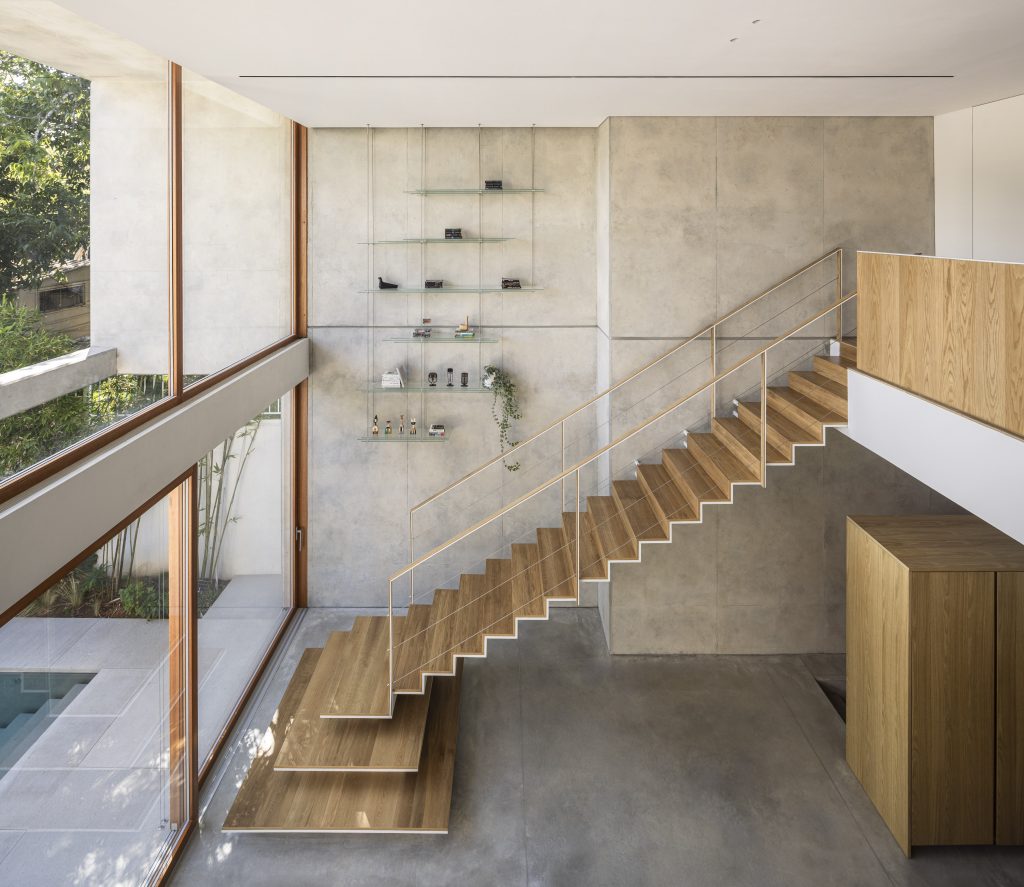
Vista di profilo degli alzanti scorrevoli HW80 Slim in legno a 4 ante
When designing high-performance window and door systems, the choice of material is paramount. Wood remains one of the most advanced options for slim-profile frames, owing to a combination of properties that no synthetic material can fully replicate, not least its outstanding thermal performance.
Wood, in fact, is a natural thermal insulator. Its cellular structure retains heat effectively, contributing to the overall performance of the system which is based on the raw material itself. The intrinsic characteristics of wood result in a tangible and distinct design advantage: less material is required to achieve high levels of insulation. Furthermore, it fits perfectly with the minimalist frame philosophy, where every millimetre of the profile must perform at maximum efficiency.
However, the benefits of wood extend beyond thermal insulation. It is a living material, capable of absorbing and releasing moisture, naturally regulating the indoor microclimate. It also dampens acoustic vibrations more effectively than many artificial materials. For architects and designers, choosing wood means working with a material that offers qualities difficult or impossible to achieve in any other way.
The Aesthetics and Appeal of Wood in Window and Door Design
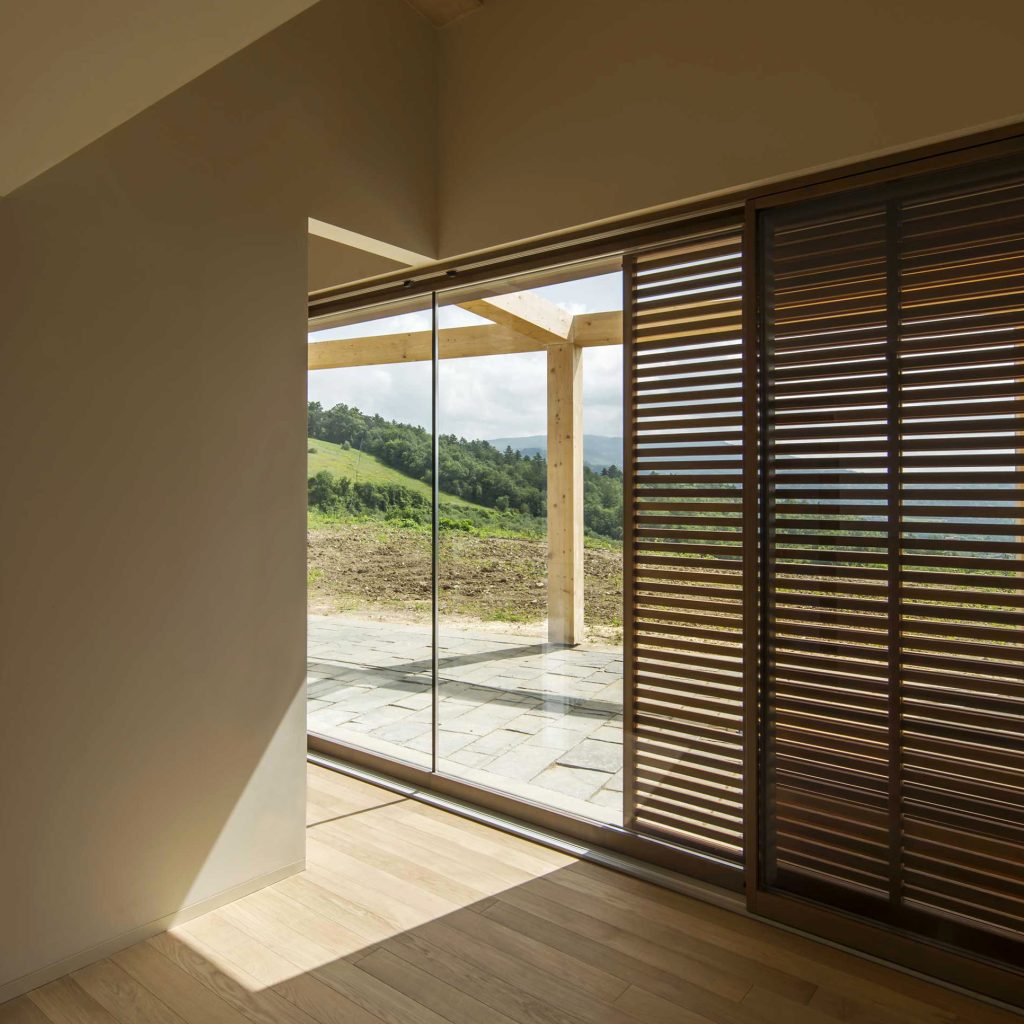
Frangisole scorrevole in legno a doghe abbinato al serramento Skyline Sliding
From a design perspective, wood brings a quality to interior spaces that goes beyond technical specifications; it provides warmth, texture and visual depth. The grain of oak, the clean lines of fir, and the rich tone of sapele mahogany are not merely decorative details; they are compositional design elements that interact with the building’s outer materials, the interior finishes, and with the light filtering through the glass. In a slim-profile window or door system, where the frame is reduced to the bare minimum, the quality of the material becomes even more evident.
Durability and Sustainability: the Longevity of Wood
When properly treated and maintained, wood guarantees excellent durability even when exposed to challenging weather conditions. Modern coating systems, such as the water-based coating technologies used by Carminati, backed by an outdoor performance guarantee, protect the surface over time without altering its natural appearance. They preserve both the aesthetic qualities and technical performance of the material for years to come. In terms of sustainability, wood is a renewable material with a low energy footprint throughout its production cycle. It also offers a favourable CO₂ balance compared to metallic or composite materials. These factors are increasingly important considerations during the design phase and in the selection of materials for high-performance architectural projects.
Minimal Timber Frames: the Carminati Range of Woods and Finishes
Carminati works with a carefully selected range of woods, including fir, oak, larch, sapele mahogany, pine, available in finishes ranging from natural oil treatments to opaque coatings, right through to wood-aluminium combinations for projects requiring even higher levels of outdoor performance. Each wood species brings its own distinctive aesthetic and technical characteristics; whilst every finish can be customised to meet the specific requirements of the project. Rather than offering a catalogue of standard options, Carminati provides a flexible system designed to foster open collaboration with architects and designers.
Skyline Minimal Frames: A Collection of Slim-Profile Window and Door Systems
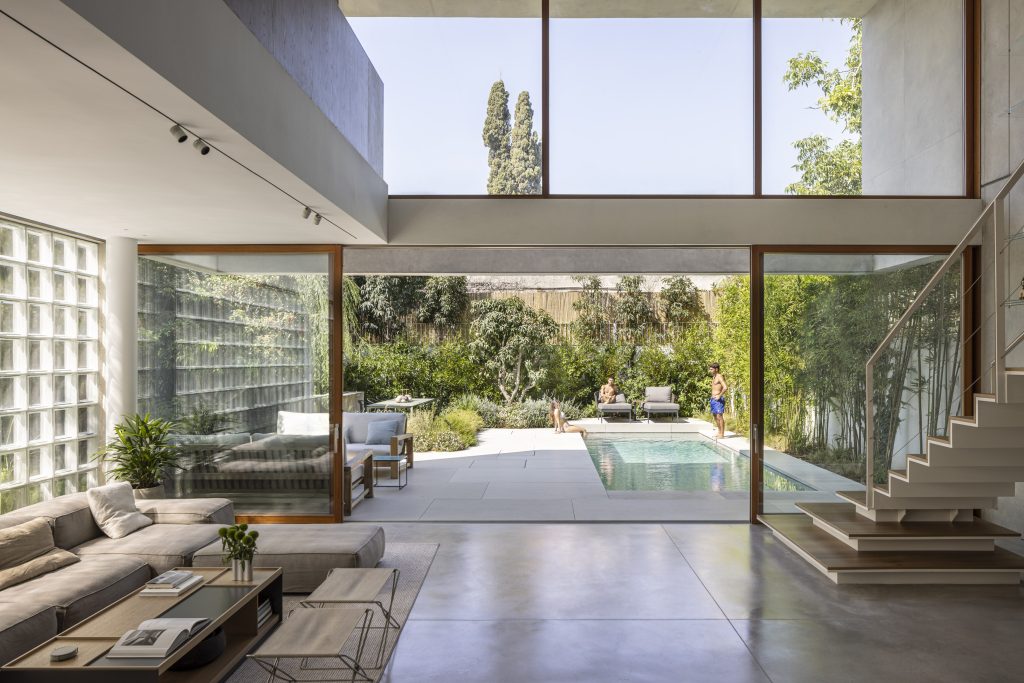
Carminati’s Skyline collection originates from a specific challenge: is it possible to push the minimal frame philosophy to its most extreme limits without compromising on performance? The result is a range of slim-profile window and door systems available in three distinct styles: Modern, Classic and Metal, each designed to complement a different architectural style: from contemporary minimalism to the timeless elegance of wood, and through to wood–metal combinations for projects requiring a more industrial or understated aesthetic.
Skyline Minimal Frames redefines the concept of the frame as a building element, striking the perfect balance between contemporary design and classic craftsmanship.
The product that best embodies the Skyline vision is probably the lift-and-slide system: a solution capable of accommodating openings up to 3 meters wide and 5 meters high per sash, with individual panels weighing up to 700 kg, or even 1,000 kg when equipped with steel components. These figures reflect an extraordinary level of engineering, achieved with a visible profile of only 37 mm. For architects and designers, this means the ability to work with glazing of almost architectural scale, whilst at the same time preserving the visual lightness of the minimal frame and the seamless continuity between interior spaces and the surrounding landscape that characterises the highest-quality projects.
What makes this possible is a series of proprietary technologies developed in-house such as the recessed fibreglass floor guide. This floor guide features a flexible articulated belt and integrated drainage, registered at national and European level, and eliminates any gap between the floor and the window frame. Equally important is the structural glass bonding system used in the hinged casement windows, and which transforms the glass itself into a load-bearing element, further reducing the mass of the profile. These solutions are not the result of improvements to existing products, but rather of original research focused on solving real architectural and design challenges.
Let’s Design Together: Carminati’s Technical Consultancy Services
Skyline window and door systems are not selected from a standard catalogue. Every project is met with a bespoke solution developed in close collaboration with Carminati’s technical team from the earliest stages of the design process.
To explore the possibilities offered by the Skyline collection, request technical specifications or discuss a specific project, contact us directly. Our specialists are on hand to support you throughout every stage of the project, from initial concept and design development through to installation and final implementation.